
If you are considering a major home energy upgrade in Waterloo Region, it is worth understanding RetrofitWR before choosing equipment or starting work. The RetrofitWR program runs from 2026 through 2030 and is designed to help eligible homeowners plan energy-saving improvements with support from an Energy Coach.
For homeowners thinking about a heat pump, insulation, water heating, windows, solar, or a larger whole-home retrofit, the program can provide a useful framework for planning the project. However, not every benefit is available to every homeowner, so understanding the eligibility rules is an important first step.
What RetrofitWR Actually Provides
RetrofitWR offers three main forms of support: Energy Coaching, financing for certain eligible homeowners, and available incentives for qualifying improvements. These benefits need to be considered separately because their eligibility requirements are not identical.
Energy Coach services are available to eligible homeowners across Waterloo Region. The financing component is more limited and applies specifically to eligible GrandBridge Energy electricity customers in Cambridge and North Dumfries.
The program also includes incentives for certain eligible improvements. Homeowners can review the downloadable RetrofitWR brochure for a program overview and should confirm current requirements before making purchasing decisions.
Which Home Improvements Can Be Part of a RetrofitWR Project?
A home energy retrofit can involve much more than replacing a furnace or air conditioner. RetrofitWR identifies a range of potential improvements, allowing homeowners to consider how different parts of the home affect overall energy use.
Potential projects include heating and cooling systems, ventilation, water heating, insulation and air sealing, windows and doors, electrical upgrades, solar and batteries, lighting, appliances, and certain health and safety improvements.
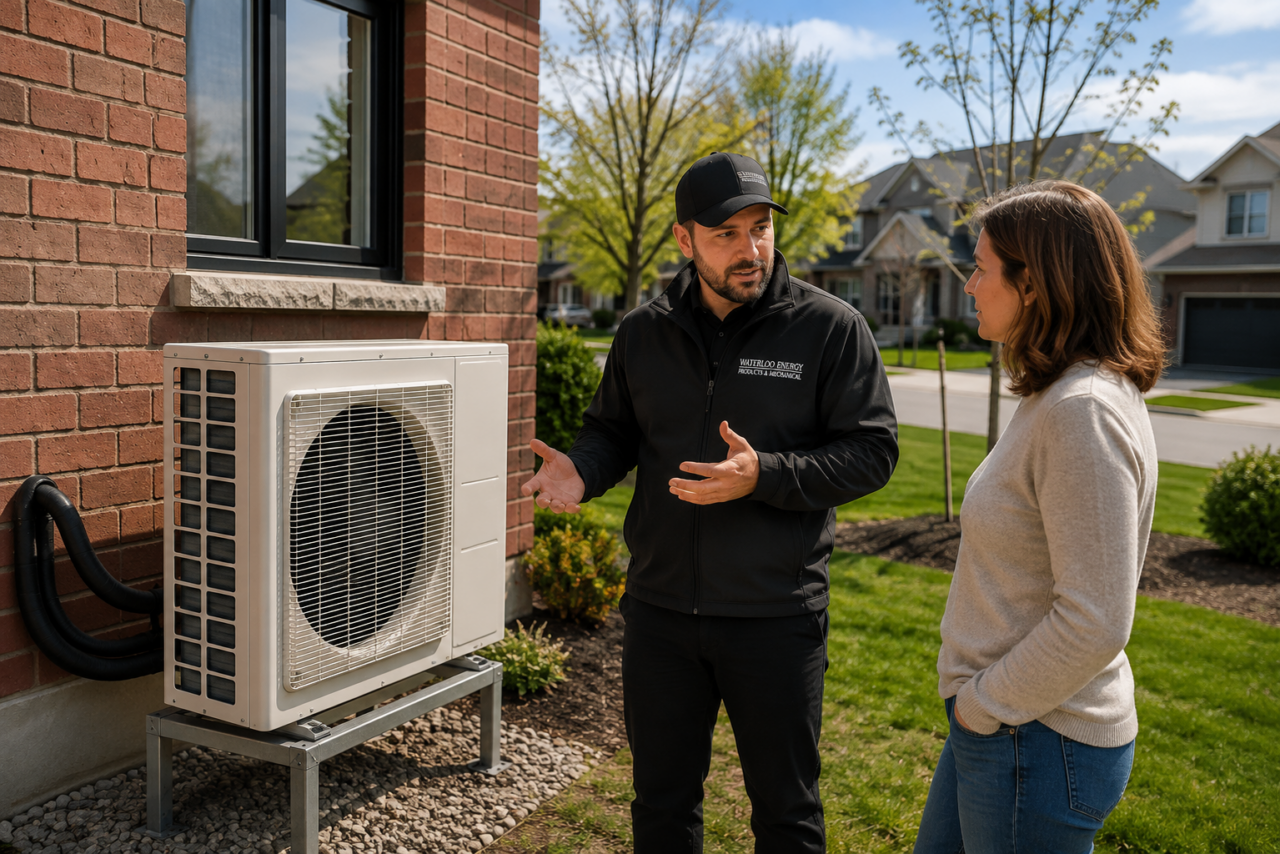
Heating and cooling can be a significant part of this planning. Depending on the home and project requirements, homeowners may investigate an air-source heat pump as an alternative or supplement to conventional heating and cooling equipment.
For homeowners considering a larger heating and cooling retrofit, a geothermal system is another option worth evaluating. Ground-source heat pumps require different site, installation, and budget considerations, so they should be assessed as part of the overall retrofit plan.
Water heating may also be included in a broader energy-efficiency project. Options for domestic hot water heating can include electric and heat-pump water heaters, depending on the home’s requirements and the applicable program criteria.
Heat Pumps Have a Specific Incentive Opportunity
Heat pumps receive particular attention under RetrofitWR because the program brochure identifies an incentive of up to $2,500 for eligible heat pumps.
The important word is “eligible.” The incentive should not be treated as a universal $2,500 heat pump rebate for every Waterloo Region homeowner or every heat pump installation.
Equipment requirements, homeowner eligibility, program availability, and other conditions may affect whether an installation qualifies. Because program terms can change, homeowners should verify the current incentive requirements before relying on a specific amount when calculating their project budget.
The $10,000-$40,000 Loan Is Not Available Everywhere in Waterloo Region
One of the most important RetrofitWR distinctions involves financing. Although Energy Coach services are available to eligible homeowners across Waterloo Region, the loan described in the program brochure has more specific geographic and utility requirements.
The $10,000 to $40,000 financing is for eligible GrandBridge Energy electricity customers in Cambridge and North Dumfries. It should not be presented as financing that is automatically available to homeowners throughout Waterloo Region.
According to the brochure, the loan carries 2.5% interest and offers repayment terms of 10 or 15 years. Repayment is made through the participating homeowner’s GrandBridge Energy bill.
There are also project requirements to consider. The brochure specifies a minimum project value of $10,000 and a minimum 25% energy reduction, along with other property and assessment requirements.
These conditions make it especially important to determine eligibility before committing to equipment or assuming financing will be available. A project that appears suitable from an equipment perspective still needs to meet the program’s applicable requirements.
Why You Should Start With the Energy Coach, Not the Equipment
It can be tempting to begin a retrofit by choosing a new heat pump, water heater, or other piece of equipment. RetrofitWR’s process makes a different starting point more appropriate.
Homeowners should first visit the RetrofitWR program website to confirm current requirements and obtain Energy Coach contact information. The Energy Coach can help homeowners understand eligibility and the steps that need to happen before work begins.
The program sequence generally starts with contacting the Energy Coach and confirming eligibility. A pre-retrofit assessment follows, after which financing can be established where applicable. The upgrades are then completed, followed by a post-retrofit assessment.
Following that sequence matters because a retrofit is ultimately about the performance of the home, not just an individual appliance. Insulation levels, air leakage, windows, ventilation, electrical capacity, and existing mechanical systems can all affect which improvements make sense.
A whole-home approach to HVAC design and project planning can help homeowners evaluate these factors before selecting equipment. This can be particularly useful when a project involves changing heating technologies or coordinating several upgrades.
Planning the HVAC Portion of Your Retrofit
Once you understand RetrofitWR eligibility and the project’s assessment requirements, the next step is determining what mechanical improvements make sense for the home.
For some properties, that could mean evaluating an air-source heat pump. For others, the project might involve geothermal, water-heating improvements, ventilation changes, or upgrades that work alongside insulation and air-sealing measures.
The equipment itself is only one part of the decision. System sizing, the home’s heating and cooling requirements, existing ductwork or distribution systems, electrical capacity, installation conditions, and long-term operating needs should also be considered.
RetrofitWR also requires applicable work to be completed using qualified contractors. Understanding the professional HVAC installation process before work begins can help homeowners coordinate the mechanical portion of the retrofit with the program’s broader requirements.
Waterloo Energy Products and Mechanical does not administer RetrofitWR or determine whether a homeowner qualifies. Its role is in helping homeowners evaluate and complete heating, cooling, heat pump, geothermal, water-heating, and related mechanical work once program requirements and project needs are understood.
Thinking About an Upgrade? Start Before You Buy
RetrofitWR creates an opportunity for eligible Waterloo Region homeowners to take a more structured approach to home energy improvements. Energy Coaching can help homeowners understand the process, while eligible Cambridge and North Dumfries GrandBridge Energy customers may also have access to the program’s on-bill financing.
The program is scheduled to operate from 2026 through 2030, but requirements, incentives, and eligibility can change. Homeowners should confirm the latest information directly with RetrofitWR before purchasing equipment, signing contracts, or making financial assumptions.
Confirm RetrofitWR eligibility with the program’s Energy Coach, then speak with Waterloo Energy Products and Mechanical about qualifying heating, cooling, heat pump, or water-heating upgrades.