

The Assumption That Stops Projects Midway
Many homeowners in Waterloo Region begin their heat pump journey by comparing models and rebate programs. They focus on efficiency ratings, cold climate performance, and installation timelines. It feels like a straightforward equipment decision.
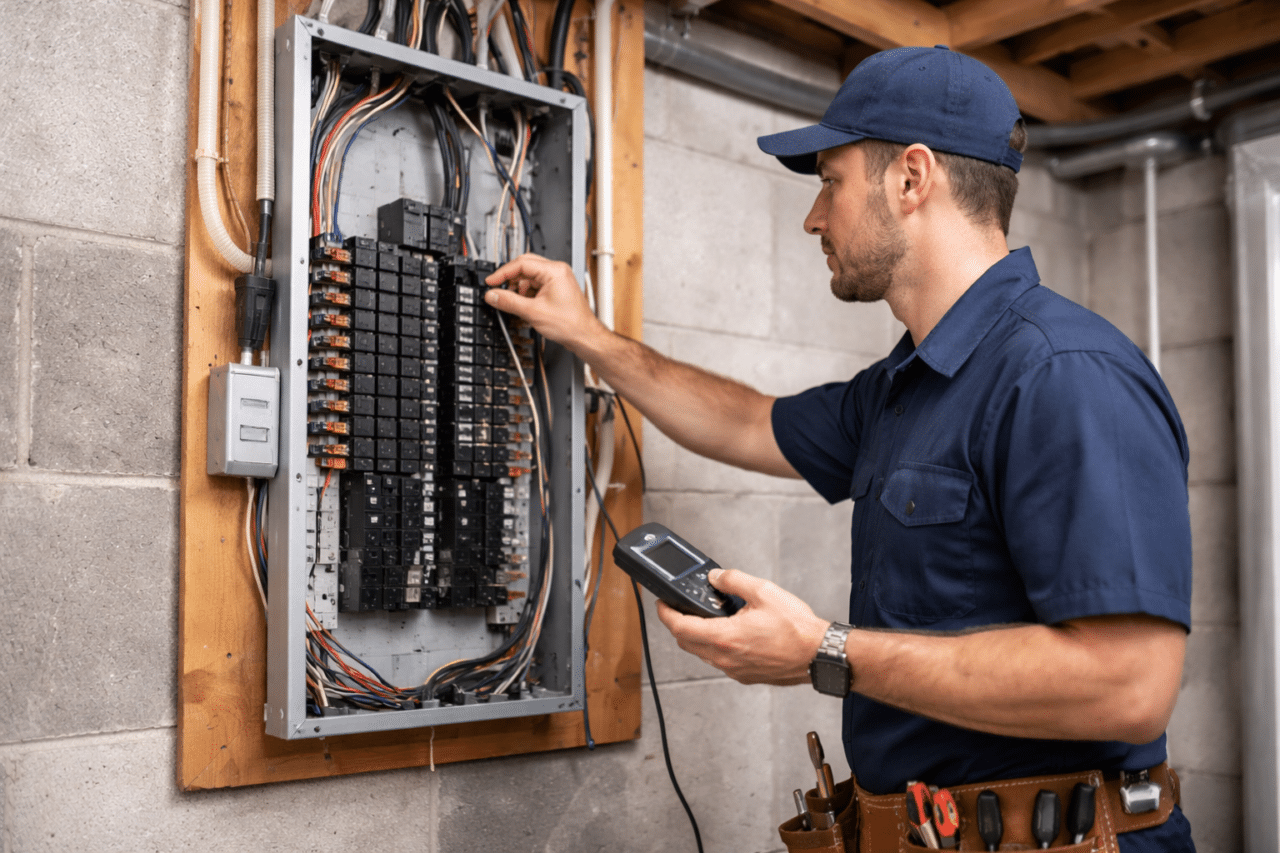
Then the installer inspects the electrical panel.
In many older homes across Waterloo, Kitchener, and Cambridge, a 100 amp service was standard when the house was built. That capacity was designed for lighting, small appliances, and perhaps an electric stove or dryer. It was not designed for whole-home electrification.
When a panel cannot support a new heat pump, the project pauses. Suddenly, there is discussion of a 200 amp service upgrade, utility coordination, and added cost. Understanding your electrical capacity before selecting equipment prevents this mid-project shift.
How Much Power Does a Heat Pump Actually Require?
Heat pumps are efficient because they transfer heat instead of generating it through combustion. However, they still rely on dedicated electrical circuits and sufficient amperage.
A typical air-source system requires a 240 volt circuit and a properly sized breaker. Cold climate systems designed for Ontario winters may draw higher amperage during peak demand. System size, auxiliary heating elements, and home square footage all influence electrical requirements.
You can review system types and performance ranges on the air source heat pump product page. These specifications illustrate why electrical planning must happen before installation.
Geothermal systems can require additional coordination. In addition to the main unit, there may be circulation pumps and control components that contribute to total load. Electrical considerations for these systems are outlined on the geothermal systems page.
A common misconception is that choosing a specific brand will reduce electrical demand enough to avoid an upgrade. In reality, electrical requirements are determined by system capacity and code compliance. Marketing claims do not override Ontario Electrical Safety Code standards.
Breaker space is another limiting factor. Even if your panel technically has available amperage, a full breaker panel may not allow new dedicated circuits. Physical space matters just as much as total load capacity.
100 Amp vs 200 Amp Service in Older Waterloo Homes
Housing stock across Waterloo Region varies widely. Some newer developments already have 200 amp service. Many established neighborhoods still operate on 100 amp panels.
A 100 amp panel may be sufficient if the home has modest electrical demand. However, when you add central air conditioning, electric cooking appliances, EV chargers, and a heat pump, the total load increases quickly.
Before any recommendation is made, a formal load calculation should be performed. This calculation evaluates existing circuits, appliance ratings, square footage, and heating demand. Proper planning through professional system design services ensures equipment selection aligns with your home’s electrical reality.
Panel age also plays a role. Older breaker panels may be nearing the end of their service life. Some homes still contain fuse panels, which typically require replacement before major upgrades. In these cases, the conversation is not only about capacity but also safety and long-term reliability.
Limited breaker slots are another common constraint. Even if calculations show remaining capacity, there may be no safe way to add the required circuits without replacing the panel.
When a Panel Upgrade Becomes Mandatory
A panel upgrade becomes mandatory when load calculations show the system would exceed the panel’s rated capacity or when the panel fails to meet current safety standards.
In Ontario, all electrical work must comply with Electrical Safety Authority requirements. If a heat pump installation increases demand beyond the panel rating, upgrading to 200 amp service is required for compliance. This is not a discretionary choice. It is a safety requirement.
The upgrade process typically involves replacing the existing panel, upgrading the service cable if necessary, and coordinating with the local utility for meter and service adjustments. Inspections are part of the process to ensure code compliance.
During a heat pump project, HVAC technicians and licensed electricians coordinate timelines. Electrical preparation may occur before the equipment is set, or simultaneously depending on scope. You can review how trades are coordinated during a typical project on the installation services page.
It is important to distinguish between required upgrades and proactive upgrades. Some homeowners choose to move to 200 amp service to prepare for future electrification such as EV charging. Others upgrade only because their current panel cannot legally support the new load.
What a Panel Upgrade Costs and What Rebates Cover
Panel upgrades involve more than swapping a breaker box. Costs can include:
- New electrical panel installation
- Service upgrade from 100 amp to 200 amp
- Upgraded service cable and grounding
- Utility coordination and inspections
Pricing varies depending on basement access, existing wiring condition, and local utility requirements in Waterloo Region.
For homeowners concerned about upfront impact, panel upgrades can often be incorporated into the broader project budget. Available financing options may allow electrical work and heat pump installation to be managed under one structured plan.
Rebates are another area of confusion. Many homeowners assume electrical infrastructure upgrades are covered under incentive programs. In most cases, rebate programs focus on qualifying equipment efficiency rather than panel replacements or service upgrades.
Details about current eligibility requirements can be found on the Ontario heat pump rebate page. Always confirm what is included before making financial assumptions. Electrical upgrades are typically considered homeowner responsibility unless specifically stated otherwise in program guidelines.
When You May Not Need an Upgrade
Not every home requires a full service upgrade.
In some situations, load management devices can help balance electrical demand. These systems temporarily prioritize certain loads, reducing the likelihood of exceeding panel limits.
Hybrid heating systems may also reduce peak electrical demand by maintaining a secondary heating source. In carefully designed systems, this can lower required amperage during extreme cold.
Energy-efficient equipment selection and proper sizing also make a difference. Oversized systems increase electrical demand unnecessarily. Accurate load calculations ensure the system matches the home’s heating requirements without adding avoidable strain.
However, these solutions are conditional. They depend on the home’s existing configuration and long-term electrification goals. An on-site assessment is the only reliable way to determine feasibility.
The Right First Step Before Choosing Equipment
Choosing a heat pump model before confirming electrical capacity can lead to delays and unexpected cost adjustments.
The correct first step is a comprehensive home energy assessment. This includes reviewing heating needs, conducting load calculations, and inspecting the electrical panel. With that information, you can make informed equipment decisions that align with your home’s infrastructure.
If you are planning a heat pump installation in Waterloo Region, begin by confirming whether your panel can support the system you want. Book a home energy assessment to confirm electrical capacity before selecting equipment by visiting the contact page.