
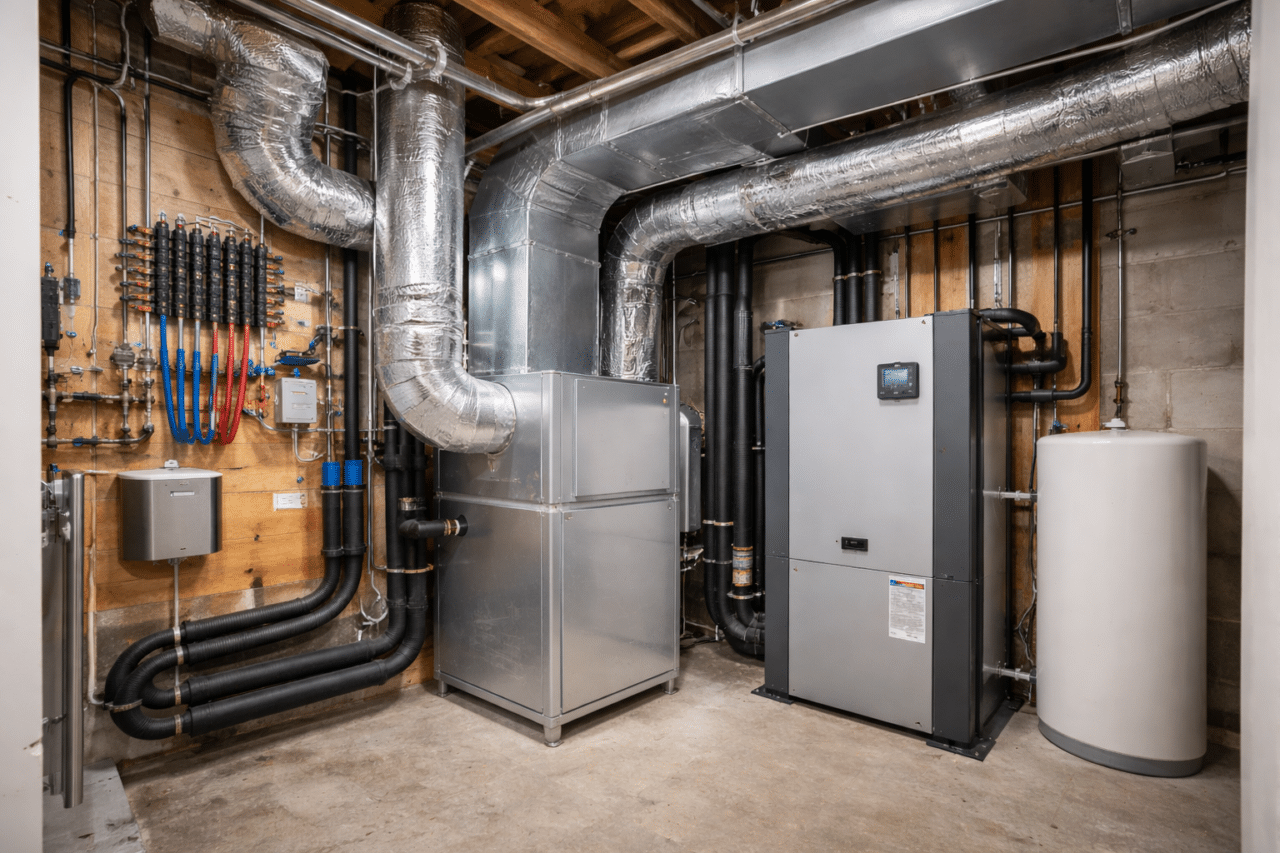
The Costly Assumption
Many homeowners believe a geothermal retrofit Waterloo homes can be completed by simply removing the existing furnace and installing a ground-source heat pump in its place. On the surface, that seems logical. The ductwork is already there. The mechanical room is already set up. The home has been heated for years without issue.
The mistake becomes clear only after installation.
Drilling is complete. The geothermal unit is running. Yet some rooms feel cooler than expected. Airflow seems weak. The system runs longer than anticipated during cold snaps. At that stage, correcting underlying distribution or insulation issues becomes more expensive and disruptive.
The most costly error is not choosing the wrong brand. It is failing to evaluate whether the home itself can support geothermal performance before committing to drilling.
How Geothermal Systems Interact With Older Homes
Geothermal systems transfer heat from the ground into the home through a closed loop system. In water-to-air configurations, the unit delivers heated air through ductwork. In water-to-water systems, it may feed radiant floors or hydronic distribution.
You can review system configurations and operating principles on the geothermal systems page. Regardless of configuration, geothermal relies on stable airflow and proper heat exchange.
Older furnaces often produced higher supply air temperatures. Because that air was hotter, duct systems did not need to move as much volume to maintain comfort. Geothermal systems typically operate with lower supply air temperatures over longer cycles. That requires consistent airflow and balanced returns.
Efficiency ratings alone do not solve airflow limitations. A high-performance geothermal unit installed on undersized ductwork will not deliver expected comfort levels.
Mechanical space constraints are also common in pre-2005 homes. Buffer tanks, circulation pumps, and loop connections require careful layout. Tight basements or mechanical rooms may need modifications before installation can proceed smoothly.
The Real Retrofit Risk: Undersized or Leaking Ductwork
The most frequent issue in a geothermal installation older home projects encounter is inadequate ductwork.
Many older bungalows in Waterloo were designed with minimal return air pathways. Additions were sometimes tied into the system without resizing the main trunk. Finished basements may have been connected with flexible runs that restrict airflow.
When static pressure increases, blower motors work harder. Airflow drops. Rooms furthest from the furnace experience uneven temperatures. Geothermal systems depend on steady airflow across the coil to maintain performance.
A full evaluation should include static pressure testing, airflow measurement, and inspection for leakage. Professional system design services address these factors before drilling is scheduled.
If duct modifications are required, addressing them during the planning stage prevents post-installation disruption. Retrofitting ducts after equipment is installed can involve opening ceilings or walls, increasing total project cost.
Envelope and Insulation Gaps That Increase System Size
The building envelope significantly influences system sizing. Heat loss through attic insulation gaps, older windows, or uninsulated basement walls increases heating demand.
If the home loses heat quickly, the geothermal system must be sized larger to compensate. Larger systems require larger loop fields. Larger loop fields increase drilling depth and cost.
In contrast, improving insulation or sealing air leaks can reduce the required system capacity. The long-term operating advantages described on the geothermal benefits page are most effective when the home is thermally optimized.
Addressing envelope weaknesses may reduce loop size and drilling requirements. That can offset part of the upgrade cost while improving comfort year-round.
Ignoring insulation gaps often leads to oversizing. Oversized systems increase capital cost and may cycle less efficiently over time.
What Proper Retrofit Planning Looks Like
A successful geothermal retrofit follows a structured sequence.
First, a detailed heat loss and heat gain calculation determines actual demand. This is not based on square footage alone. It considers insulation levels, window performance, orientation, and infiltration rates.
Second, the duct system is evaluated for airflow capacity and leakage. Adjustments may include resizing trunks, adding return air pathways, or sealing joints.
Third, electrical service is reviewed to confirm it can support the new system. Panel upgrades may be required in some older homes.
Fourth, mechanical room layout is planned to accommodate the geothermal unit, buffer tanks, and loop connections without restricting access or airflow.
Only after these steps are complete should loop field sizing and drilling plans be finalized.
Coordinating drilling crews, HVAC technicians, and electricians requires careful scheduling. Mechanical changes may need to be completed before final system commissioning. You can review how retrofit coordination is managed on the installation services page.
The key distinction is design-first versus equipment-first. A design-first approach evaluates the home as a complete system. An equipment-first approach selects tonnage prematurely and hopes existing infrastructure will accommodate it.
Cost Planning and Rebates
Retrofit geothermal cost Waterloo homeowners experience includes several major components:
- Loop field drilling
- Geothermal unit and mechanical components
- Duct upgrades
- Electrical adjustments
- Permit and inspection fees
Infrastructure improvements are often necessary in older homes. These should be identified early and incorporated into the total project plan.
Financial structuring options available through financing services can help manage staged upgrades. Planning duct modifications and insulation improvements at the same time as drilling may improve overall cost efficiency.
Rebates can reduce qualifying equipment costs, but they do not eliminate infrastructure requirements. Details about current eligibility and scope are outlined on the Ontario geothermal rebate page. Always confirm what qualifies before finalizing budgets.
Incentives are designed to support properly engineered systems. They do not compensate for incomplete assessments or overlooked distribution limitations.
The Right First Step for Older Waterloo Homes
Geothermal can perform exceptionally well in older Waterloo homes when properly planned. It is not automatically unsuitable. However, it requires evaluation beyond equipment selection.
Before committing to drilling contracts or selecting tonnage, schedule a full feasibility assessment. This review should evaluate ductwork, insulation, electrical capacity, and mechanical layout.
Taking this step first prevents costly mid-project corrections and long-term comfort issues.
If you are considering geothermal in a pre-2005 home, schedule a geothermal feasibility assessment before committing to drilling or equipment by visiting the contact page.