

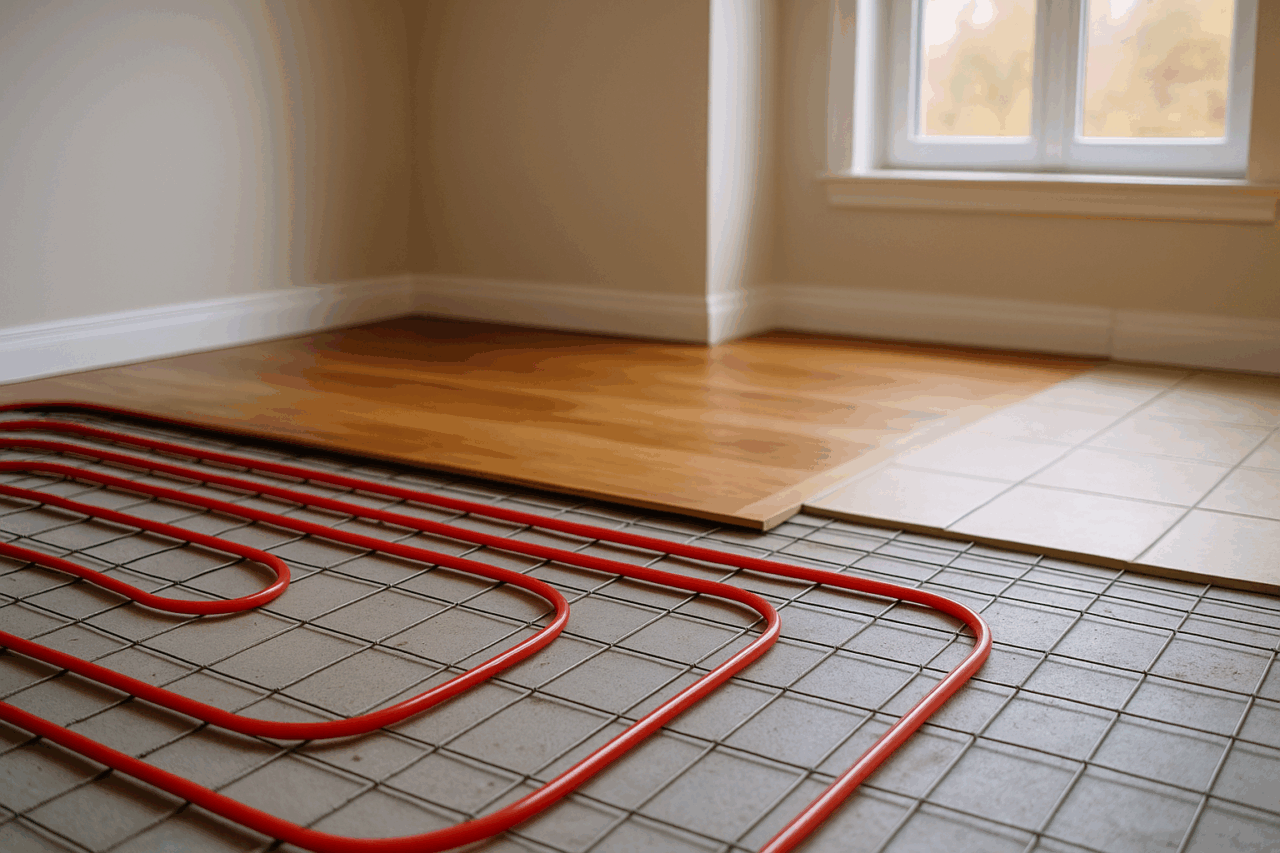
Most older homes in Waterloo weren’t built with radiant floor heating in mind. Most rely on baseboards, cast-iron radiators, or forced-air systems that push warm air unevenly, leaving cold spots in rooms and cold floors underfoot. But even in homes built decades ago, radiant floor heating can be added — and it’s one of the most comfortable, efficient upgrades available today.
For many homeowners in the Kitchener-Waterloo area, winter comfort and energy savings matter more than ever. Let’s look at how radiant floor heating performs in older homes, what installation really involves, and why the results are often worth the investment.
What Radiant Floor Heating Actually Does
Unlike traditional systems that heat the air, radiant floor systems warm the surfaces in your home — starting with the floor itself. Heat rises gently and evenly, eliminating cold spots and drafts. The warmth radiates through tile, wood, or laminate, creating consistent comfort from your feet to the ceiling.
There are two main types of radiant floor systems:
- Hydronic (water-based): Uses a network of tubing under the floor that circulates warm water from a high-efficiency boiler. It’s the most cost-effective option for heating entire homes or large areas.
- Electric (wire-based): Uses heating cables or mats installed beneath flooring. These are best for smaller spaces, like bathrooms or kitchens, where you want extra warmth.
Both systems can be installed in older homes — the right choice depends on your space, flooring, and existing heating setup.
How It Works in Older Waterloo Homes
Older homes in Waterloo often have unique challenges: uneven subfloors, limited crawl spaces, or existing flooring that can’t easily be removed. Radiant systems can be designed around these limitations.
If you’re already planning a renovation — for example, new tile in a kitchen or refinishing a basement — adding radiant heating during that process is the most efficient approach. The tubing or mats can be installed directly beneath new flooring layers, minimizing disruption and extra cost.
In homes with a strong boiler system already in place, a hydronic radiant retrofit can connect directly to that system. Upgrading to a modern, energy-efficient boiler ensures reliable performance and steady heat distribution, even during cold Waterloo winters.
For homes without existing boilers or where space is tight, electric radiant mats can often be installed under tile or laminate floors without raising floor height significantly. These systems are especially popular in bathrooms and basements, where comfort and moisture resistance matter most.
Energy Efficiency and Long-Term Savings
Radiant heating systems are known for their efficiency. Traditional forced-air systems lose heat through ducts, while radiant heat stays close to where you feel it — the floor and lower living areas. Because the warmth spreads evenly, you can often set your thermostat two or three degrees lower and still feel comfortable.
In a well-insulated home, that can lead to energy savings over time. When paired with a high-efficiency condensing boiler, a hydronic radiant system can outperform older furnaces or baseboard setups in both comfort and cost-efficiency.
While installation costs are higher than replacing a furnace, radiant systems offer lower long-term operating costs and a noticeable improvement in comfort. For older homes in Waterloo that already need flooring upgrades or a heating system replacement, combining both projects can be a smart, future-focused move.
Common Retrofit Scenarios
Waterloo homeowners usually explore radiant heating in one of three situations:
- During a major renovation:
If you’re remodeling a kitchen, bathroom, or basement, it’s the perfect opportunity. The flooring is already being replaced, and radiant tubing or mats can be added easily. - When replacing an old boiler:
Many older homes already rely on hot water systems. When it’s time to upgrade, adding radiant heating zones can maximize your investment. A single high-efficiency boiler can supply both your home’s hot water and radiant floor heat. - Improving cold or drafty areas:
Some homeowners start small — installing radiant heat in one area where cold floors are most noticeable, like a bathroom or entryway. Over time, they expand to other zones as budget allows.
At Waterloo Energy, we’ve seen radiant retrofits succeed in everything from mid-century homes to century-old properties downtown. The key is an assessment that respects your home’s structure while optimizing comfort and efficiency.
How It Feels — and Why It’s Different
If you’ve ever walked barefoot on a warm tile floor in winter, you already know the appeal. Radiant heating provides a quiet, steady warmth that feels natural and relaxing. There’s no blower noise, no air movement kicking up dust, and no temperature swings between rooms.
This consistent, silent performance is especially noticeable in homes with open layouts or older insulation. Radiant systems eliminate the “hot upstairs, cold downstairs” problem that forced-air systems often create.
It’s also a great match for modern thermostats and zoning controls. Homeowners can program different temperatures for each room or area — for example, keeping the bathroom warmer in the morning and reducing heat in unused rooms at night.
Cost Factors to Consider
The price of installing radiant floor heating in an older home varies based on system type, flooring material, and home layout. On average:
- Electric radiant mats: $10–$20 per square foot installed
- Hydronic radiant systems: $20–$50 per square foot (including boiler integration)
These figures can fluctuate depending on floor prep, accessibility, and material choices. While that’s more than a simple furnace replacement, radiant systems typically require less maintenance and last longer — often 30 years or more for hydronic tubing.
Many homeowners offset the cost by combining projects, such as upgrading to a new boiler system or replacing old flooring. Waterloo Energy’s team helps homeowners plan these updates together, avoiding duplicated labor costs and reducing total project time.
Why It’s Worth It for Older Homes
Older homes have character, but they also have quirks — uneven floors, drafty corners, and limited ductwork. Radiant heating overcomes these issues with simplicity and performance. It doesn’t rely on air ducts or vents; it simply warms the surfaces that matter most.
Once installed, homeowners often describe it as “a completely different kind of comfort.” The heat is even, quiet, and reliable. There’s no rush of air when the system turns on, no uneven warmth, and no cold floors in the morning.
Combined with a high-efficiency boiler, radiant heating can be one of the best long-term upgrades for comfort and energy management — especially in Waterloo’s cold, damp winters.
Ready to Explore Your Options?
If your home’s heating system is due for an upgrade — or if you’re planning renovations — now is the ideal time to explore radiant floor heating. A professional consultation helps determine whether hydronic or electric systems make the most sense for your space, flooring, and budget.
Contact Waterloo Energy to schedule an in-home radiant heating consultation today. Our experts will assess your current system, recommend the right radiant setup, and show how it can transform your home’s comfort this winter.
Explore radiant in-floor heating options
Learn more about modern boilers
Schedule your consultation